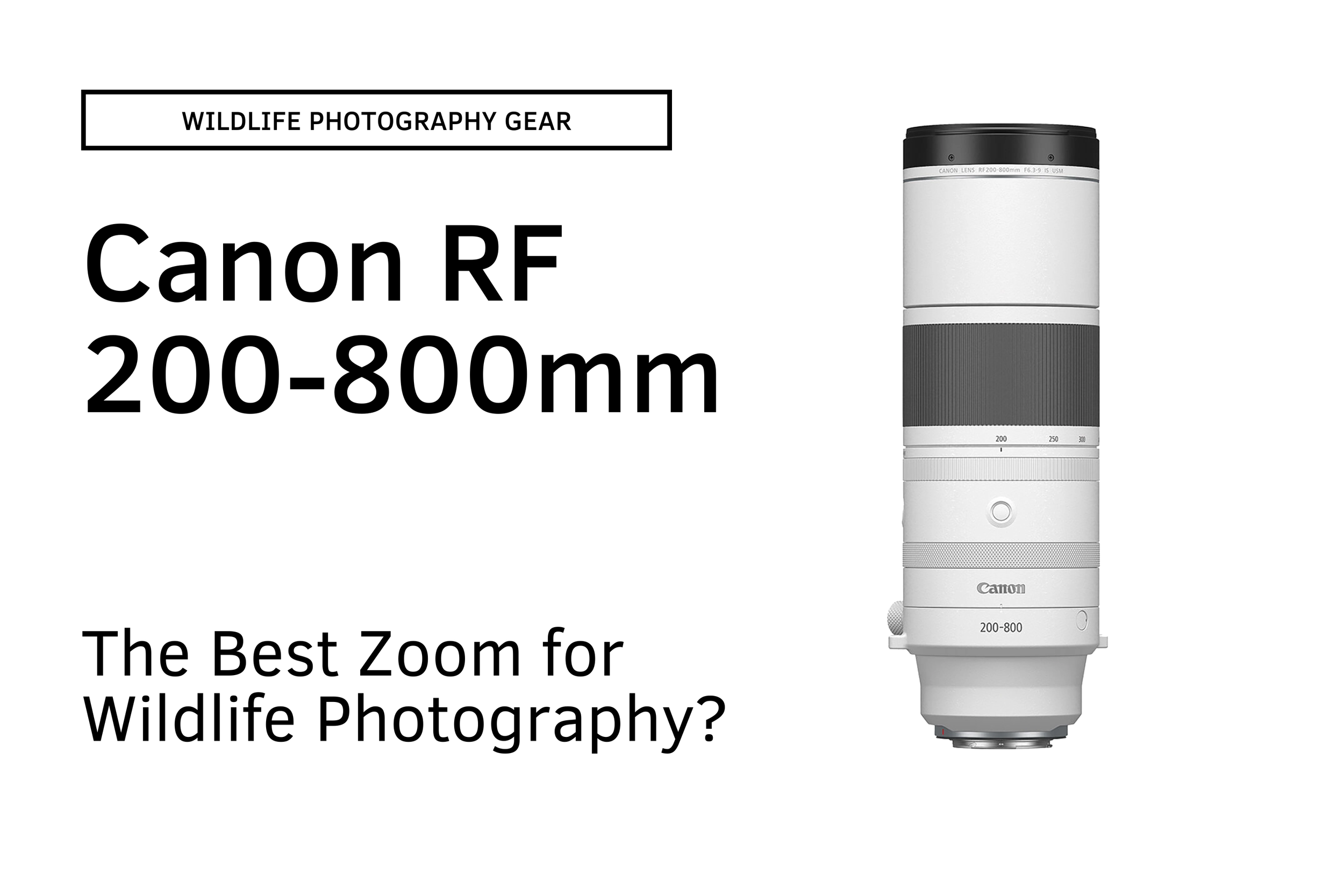
A wildlife photography lens that can do it all is nearly impossible to find, but the Canon RF 200-800mm comes close. It’s light, versatile, and offers an unbeatable zoom range for under $2,000, making it cheaper than any competitor in its class.
In this blog post, I will provide an in-depth review of the Canon RF 200-800mm. I will also share sample photos I’ve taken with it, compare it to its competitors, and discuss whether its strengths overcome its f/9 aperture. Most importantly, I’ll tell you why I think the Canon RF 200-800mm may be the best all-in-one lens for wildlife photography.

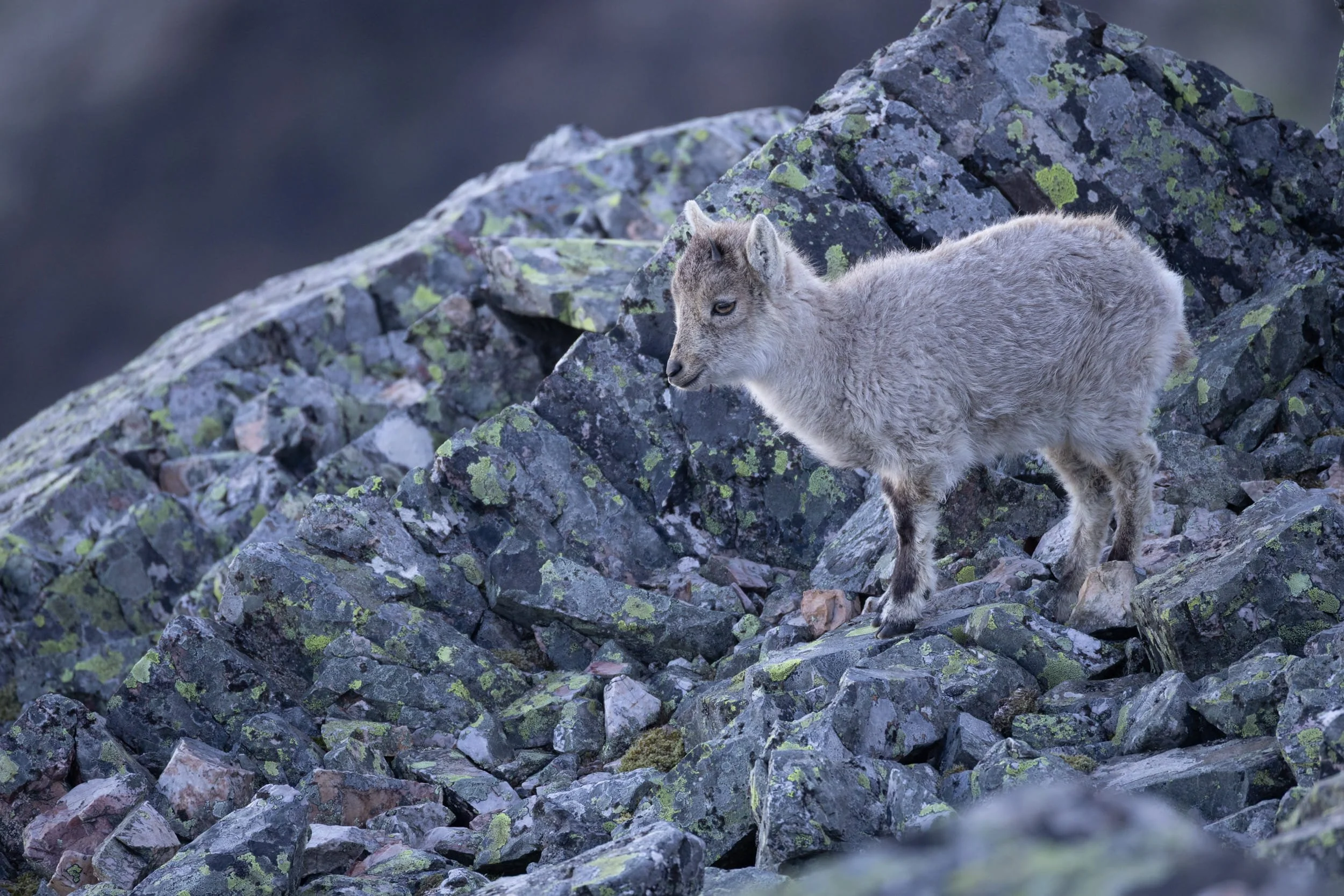
Iberian ibex | Canon R10 + Canon RF 200-800mm | ISO 400, 1/100, f/7.1 @ 268 mm
Wildlife Photography Gear Reviews
If you are a wildlife photographer on a budget, you will not want to miss these in-depth reviews about the most affordable gear on the market.
Overview of the Canon RF 200-800mm
The 200-800 mm is the first genuinely affordable super-telephoto zoom for Canon’s mirrorless RF system. Designed for wildlife photography, it bridges the gap between lightweight consumer zooms and Canon’s far more expensive L-series primes.
It targets photographers seeking excellent reach and image quality without the hefty price tag of a prime lens, which can cost $10,000 or more. Covering everything from moderate telephoto (200 mm) to super-telephoto (800 mm), it's one of the most flexible wildlife lenses ever released. And it remains compact enough to handhold, likely due to its variable aperture topping out at f/9.
This Canon lens was first launched in December 2023 for $1,899 in the US, €2,499 in mainland Europe, and £2,299 in the UK. I bought my copy from a local camera shop in the UK in September 2024 for £1,799, which is still £400 cheaper than the price Canon sells it for. (If you didn't already know, I'm a massive fan of scoring deals for photography gear.)
Since purchasing mine, I have put it through its paces to shoot a variety of wildlife in several lighting conditions in the UK, the United States, Canada, Colombia, and Mexico. That's why I'd like to help you decide if this is the right wildlife lens for you.
Specifications
Focal length: 200-800mm
Aperture range: f/6.3-9 (variable)
f/6.3 at 200mm
f/7.1 near 300mm
f/8 around 500mm
f/9 beyond ~630mm
Minimum focus distance: 2.6 ft (0.8 m) at 200mm / 10.8 ft (3.3 m) at 800mm
Image stabilization: 5.5 stops
Weight: 2,050 g (4.5 lb)
Design: External zoom, non-L-series (weather-resistant, not fully weather-sealed)
Tripod collar: Fixed, non-removable (no built-in Arca-Swiss)
Price: ~$1,899 USD
Before diving into a list of pros and cons of this lens, let’s look at three key aspects that shape the lens’ real-world performance and require a more detailed analysis:
Price
Portability
Focal length and reach
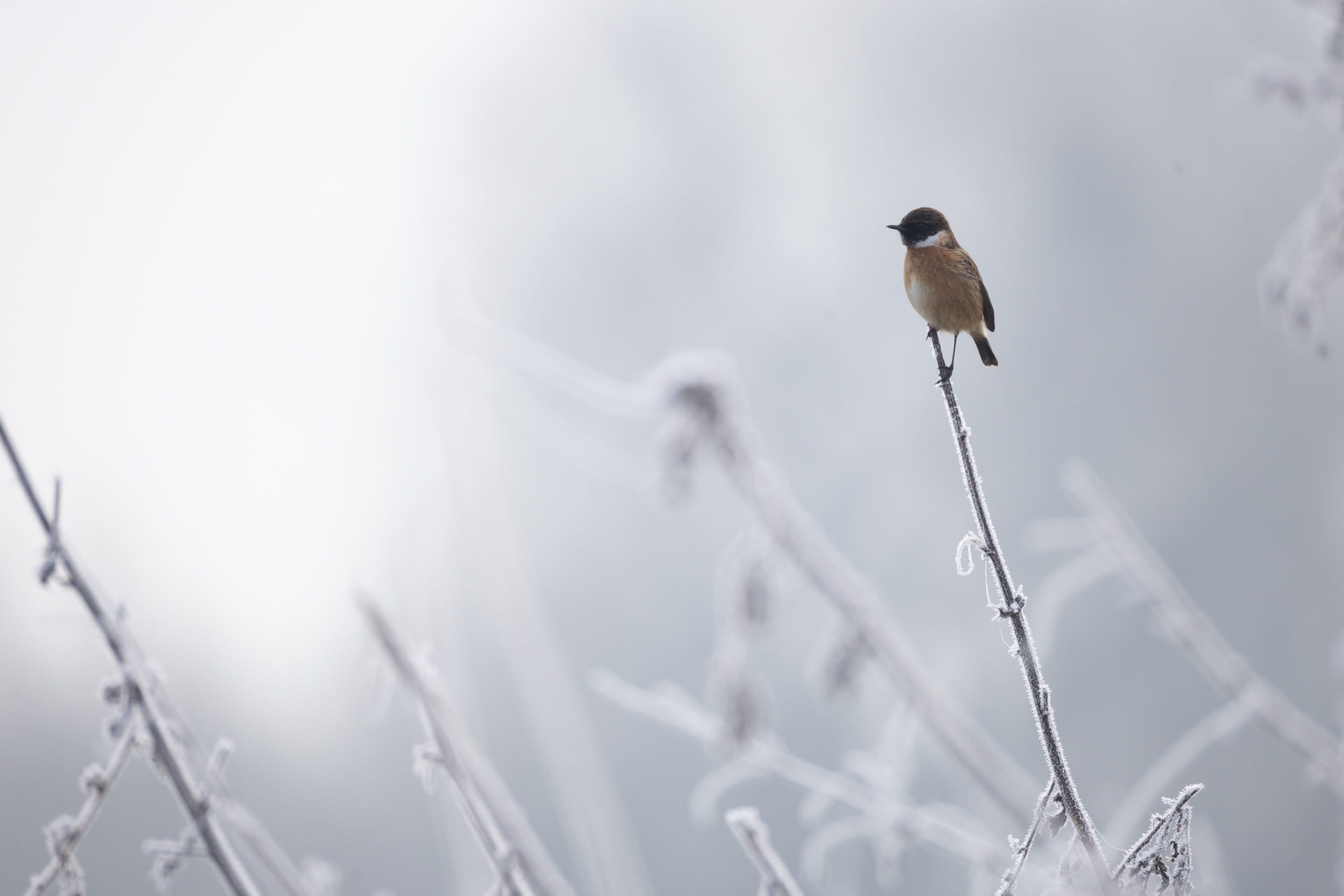
European stonechat | Canon R8 + Canon RF 200-800mm | ISO 500, 1/250, f/9 @ 800 mm
Price
At around $1,899 USD, the Canon RF 200-800 delivers exceptional value. Compared to two of Canon’s most highly regarded (and unattainable) wildlife photography lenses, the RF 800mm f/5.6 ($18,799) or 600mm f/4 ($14,449), it is extremely affordable. For a fraction of the cost, you get a lens with a greater zoom range and a lighter build.
The main compromise is a slower aperture, less rugged construction and ergonomics, but those trade-offs are minor for what you save. No other Canon lens combines this level of reach, image quality, and portability at this price. The Canon RF 200-800 offers tremendous value, and if you can live with f/9, there’s little else to complain about.
Portability
Despite its size, the 200-800mm is surprisingly easy to handhold. It’s heavier than the RF 100-400mm, but it delivers far more reach, and for an 800mm lens, it’s impressively manageable. I’ve handheld it for several hours at a time while walking or lying flat for low-angle shots, and it’s never felt unreasonably heavy.
Of course, it’s still a long lens, and you’ll feel it after a full day in the field, but compared to older or larger super-telephotos, this feels light. On smaller camera bodies like the R8 and R10, the setup is slightly front-heavy, but not so much that it becomes uncomfortable. Other photographers using bodies like the R5 II and R6 II have mentioned that the balance feels even better there, which makes sense given the extra grip and weight of those cameras.
Overall, the Canon RF 200-800mm strikes a rare balance between power and portability. It gives you serious reach without the usual compromises in usability, making it a convenient lens for wildlife photography in real-world conditions.
Focal Length and Reach
An 800mm focal length is already extreme; few lenses can reach that without a teleconverter. Historically, any lens capable of such reach came with major compromises: either an extremely high price tag or significant limitations. Take the Canon RF 800mm f/11, for instance: it’s lightweight and affordable, but fixed at 800mm and an f/11 aperture, offering no flexibility in framing.
By contrast, the Canon RF 200-800mm pushes the boundaries of what’s possible. We’d heard of Sony and Nikon’s 200-600mm lenses before, which already offered an impressive 3x zoom range. However, this lens extends that reach another 200mm, giving you a full 4x zoom range, something almost unheard of in super-telephoto lenses.
This wide focal length range makes the 200-800mm one of the most versatile wildlife lenses available. It handles everything from tight portraits to wider environmental compositions with a twist of the zoom ring. For many photographers, that means one lens can now replace several others, covering nearly every focal length you’d ever need for wildlife photography.
What’s easy to overlook is just how much that versatility saves you in terms of money, space, and weight. In the past, reaching this range often required two or three separate lenses. For example, a 100-400mm, a 500mm prime, and sometimes even an 800mm or teleconverter. Now, one lens can mostly replace all those. That means less money spent on gear and less weight and space occupied in your bag, whether you’re shooting locally or traveling. For photographers who value mobility and simplicity in the field, that’s a massive advantage.
Roughly 90% of wildlife photographers, if I had to guess, take most photos at focal lengths above 300mm. For that majority, this lens offers every focal length they’re likely to need, from 200mm all the way to 800mm. That said, there’s a growing group experimenting with shorter focal lengths to push creative boundaries. Those photographers might occasionally feel limited on the wide end, but for the overwhelming majority, the Canon RF 200-800mm provides everything they need in one lens.
Overall, it proves that you don’t have to choose between versatility and reach, redefining what a single lens can do for wildlife photographers.
Iberian ibex | Canon R8 + Canon RF 200-800mm | ISO 1250, 1/160, f/9 @ 800mm
Pros
Image Quality
Sharpness
I’m not someone who obsesses over pixel-level sharpness, but I’ve been impressed by how detailed the images look straight out of the camera. Even at 800mm and wide open at f/9, the Canon RF 200-800mm produces very usable, sharp results.
Other photographers, such as Jan Wegener, found that the lens is at its sharpest around 600-700mm, with a very slight drop in detail toward the long end: “When zooming back, you notice that the lens gets slightly sharper at 600 and 700 mm, but not to the point where you feel like it’s better to shoot zoomed back.” In real-world use, that difference is barely noticeable unless you’re pixel-peeping.
Color and Contrast
In terms of color and contrast, the Canon RF 200-800mm delivers the kind of rich, warm tones that Canon lenses are known for. The colors come out natural and pleasing on my Canon R8 and R10.
One thing I and others have noticed is that highlights can sometimes clip more easily than usual, especially on bright plumage or under harsh sunlight. Therefore, it's worth keeping an eye on your histogram or slightly underexposing more than usual in those conditions. Other than that, the contrast is solid, and the files hold up well when edited in Lightroom.
Bokeh and Background Blur
At 800mm, subject separation comes naturally, even with the f/9 maximum aperture. The bokeh is smooth and pleasing, particularly when your subject is close to the camera and far from the background.
Like most lenses with slower apertures, busy backgrounds can look more textured. However, with good fieldcraft and composition, you can make your subject stand out very well.
Autofocus
Having fast, accurate autofocus in wildlife photography is crucial. Thankfully, the Canon RF 200-800mm fits the bill.
On my Canon R8, which shares a similar autofocus system to the R6 II, it performs very well. It locks on quickly and tracks subjects reliably. On the Canon R10, the performance is still solid but less consistent. That’s mostly due to the differing autofocus systems and camera bodies, not the lens itself.
Because APS-C sensors effectively increase focal length, they also magnify movement, making precise focus harder to maintain. Their smaller size means they capture less light than full-frame sensors, especially in dim conditions, which can cause autofocus to hunt or lose subjects more often than on the R8. Autofocus performance improves even further on higher-end Canon bodies like the R5, R5 II, R3, and R1.
At f/9, the limited light can make focusing slower in dim conditions, even though Canon’s newer autofocus systems have improved significantly at handling slower apertures.
Compared to my old Nikon 300mm f/2.8, there's no question that the 200-800mm is slower to acquire and less reliable for birds in flight. That said, this isn't an L-series lens, and it's not trying to be. For its price, it performs very well.
Image Stabilization
The stabilization is one of the most significant strengths. Handholding used to be impossible at this extreme focal length, but Canon nailed it here.
I've never used it on a tripod; instead, I shoot handheld from standing, kneeling, or lying flat on the ground, and it has consistently delivered sharp images.
On my R8, I can comfortably shoot at surprisingly slow shutter speeds while keeping my shots sharp. On the R10, the smaller sensor magnifies movement, forcing the system to compensate. As a result, the image stabilization is slightly less effective, but still very competent.
Minimum Focus Distance
A quiet advantage of this lens is its minimum focus distance. You can focus as close as about 0.8 meters at 200mm and 3.3 meters at 800mm, which is excellent for a super-telephoto.
This allows you to fill the frame with close subjects without stepping back, something few long lenses can do.
To put it into perspective, it focuses closer than Canon’s RF 800mm f/5.6L and 600mm f/4L. It’s also shorter than the minimum focus distance of the RF 100-400mm, which was already impressive. On an APS-C camera, it becomes even more powerful; you achieve greater magnification at the same distance, making it excellent for detailed shots up close.
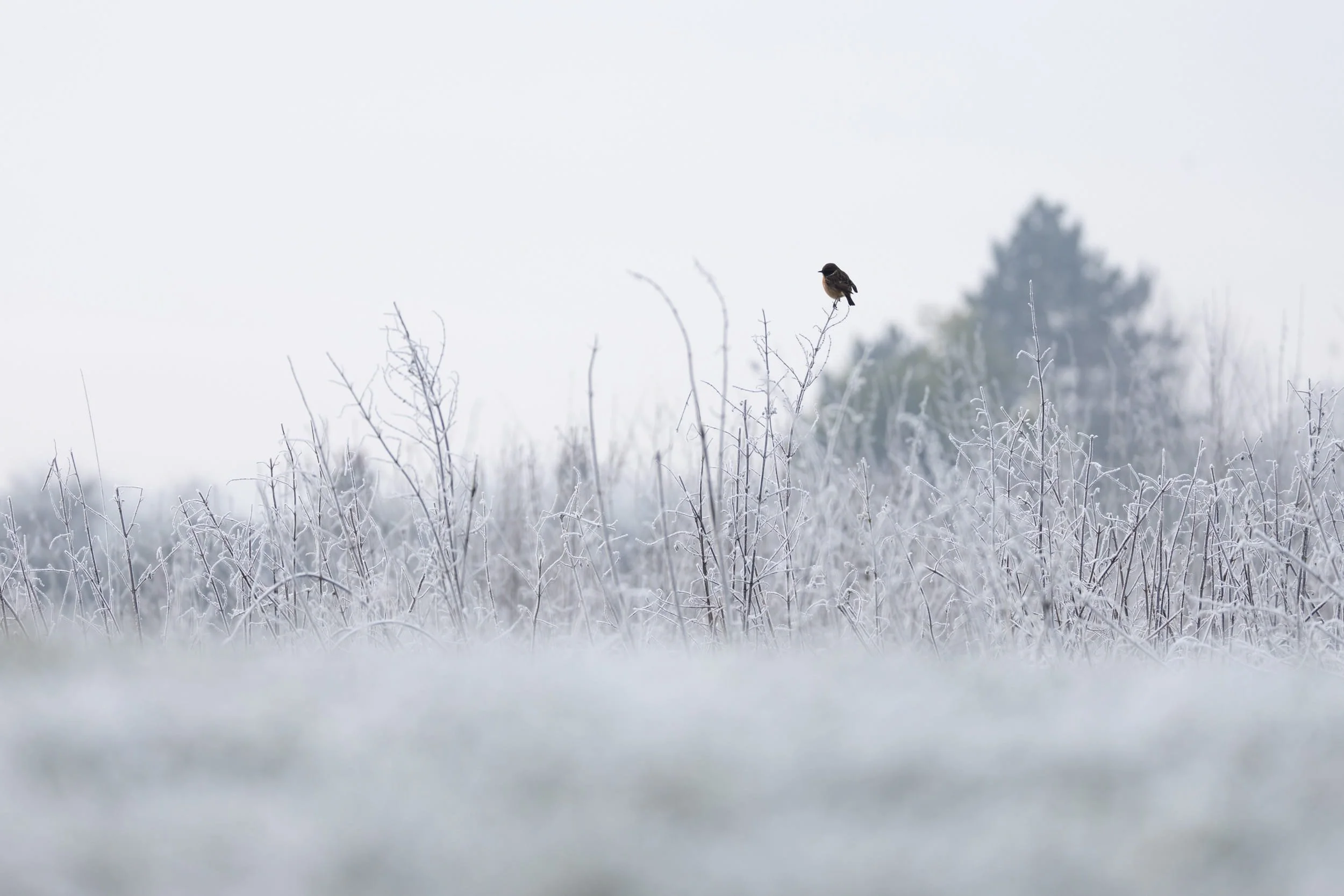
European stonechat | Canon R8 + Canon RF 200-800mm | ISO 500, 1/500, f/7.1 @ 235 mm
Cons
Aperture and low light performance
With the Canon RF 200-800mm, you have to be strategic about how you shoot in low light. This isn’t an f/2.8 or f/4 lens. The f/9 aperture limits you at dawn, dusk, and in dense forests where light is limited. In those situations, I usually do a few things to adapt.
First, I lower my shutter speed to avoid pushing ISO too high, relying on the lens’s excellent image stabilization to keep things sharp.
Second, I sometimes shoot backlit if there’s enough light behind the subject. That can help balance exposure, reduce the visible noise in shadows, and produce a softer, more artistic look.
Finally, I adjust when I shoot. Instead of classic golden hour conditions, I often wait until there’s a bit more light, especially under cloudy skies, which are common here in the UK. This lens performs beautifully in soft, diffused light.
To shoot at dawn or dusk, you just have to understand the limitations. You can’t freeze as much movement as with faster glass, so I usually focus on static subjects at those times, or occasionally embrace creative motion blur for a different effect. I’ve used this lens in all the same scenarios I would any other, but I know my shooting window is narrower.
Build Quality, Size, and Handling
After a year of use, I’ve found the RF 200-800mm reliable despite not being part of Canon’s L-series. At about 2 kg, it’s impressively light for its reach, though fully extended, it becomes long and front-heavy. I usually collapse it when walking to keep it compact and avoid knocking it against anything.
The zoom ring is smooth but has a long throw from 200 to 800mm, meaning zooming quickly can feel a bit sluggish in fast-paced situations. The fixed tripod collar adds stability but can make packing awkward, especially in smaller bags.
Because it’s an external zoom, you need to take extra care in dusty or wet conditions. After using it extensively in rain, mud, and coastal environments, I’ve found it remarkably durable as long as it’s cleaned afterward. Salt, mud, and dust can shorten the lens’s lifespan if left to dry or get inside the barrel, so I always wipe it down after each session, especially after shooting near seawater or in muddy terrain. I also avoid retracting it while wet or dirty to prevent debris from entering the mechanism. With that basic care, the lens has proven to be tougher than expected for its class.
Overall, while ergonomics and build quality are strong for a non-L lens, the compromises — front-heaviness, slower zoom action, and limited sealing — are the main trade-offs for its otherwise excellent value.
Performance in the Field
The Canon RF 200-800mm has quickly become my most versatile wildlife lens. Barring extremely dark conditions, it covers nearly every wildlife situation I encounter.
At 200-300mm, I capture wider environmental portraits. Between 400-600mm is perfect for birds in flight, and 800mm lets me photograph distant subjects or smaller animals up close.
At extreme distances, atmospheric distortion rather than sharpness becomes the limiting factor. On warm days, this will soften your images, just as with any long telephoto.
The lens adapts well to different bodies: on full-frame cameras like the R8, you get cleaner files and better autofocus; on the R10, you get more reach (320-1280mm equivalent) but more noise and slightly slower focus. It’s a trade-off between image quality and reach, and which one matters more will depend on your shooting style.
Compatibility with Teleconverters
I haven’t personally used extenders with this lens, but it’s fully compatible with the Canon RF 1.4x and 2x teleconverters. Autofocus continues to work, though you’ll lose light: f/13 on the 1.4x and f/18 on the 2x.
From what I’ve seen in my research into Jan Wegener’s review, image quality stays decent with the 1.4x, and autofocus is still largely usable, though shooting at f/13 limits low-light performance. He notes that the 2x extender is usable only in very specific situations, as you’re left with a tiny autofocus window at f/18 and notable loss in sharpness. “In certain situations, it will also work quite well with the 2x extender, but overall I would probably try to use the lens with extenders as little as possible because that will give you the best results,” said Wegener.
For practical wildlife photography, I’d recommend using teleconverters sparingly, and only if you truly need extra reach. The lens performs its best without them.
Competitors
Since I started wildlife photography, I have used and researched several lenses that I would consider to be competitors of the Canon RF 200-800mm in terms of focal length, use, and price range. So, what are the pros and cons of each when compared to this lens?
Canon RF 100-400mm f/5.6-8 IS USM
Pros
Smaller and lighter: Weighs about 635 g vs 2,050 g, making it much easier to carry and handhold.
Cheaper: around $649 USD — roughly a third of the price of the 200-800 mm.
Cons
Minimum focus distance: The 100-400mm actually achieves higher maximum magnification (0.41× vs 0.25×), meaning it can capture tighter close-up detail. However, the 200–800mm lets you fill the frame from farther away at longer focal lengths, which is often more practical for skittish wildlife.
Shorter focal length: 400mm max means you’ll miss distant or small subjects you could get at 800mm, as well as miss out on the added compression of the longer focal length.
Zoom range: The 4x zoom range (100-400mm) offers decent flexibility for general wildlife and travel, but less versatility compared to the 200-800mm’s 4x reach starting from a much longer base. You’ll need to crop more for distant subjects or smaller wildlife.
Canon RF 100-500mm f/4.5-7.1L IS USM
Pros
Better optics: L-series coatings and glass yield sharper, higher-contrast images.
Faster aperture: f/4.5-7.1 gives more flexibility in lower light or when action is involved.
Better autofocus: The dual Nano USM and premium lens internals enable smoother, faster focus tracking.
Better build quality: As an L lens, it has more robust weather sealing and more long-term durability.
Cons
More expensive: At around $2,899 USD, it is about $650 more than the 200-800 mm.
Shorter focal length: You lose that extra 300mm stretch at the long end without teleconverters.
Canon RF 800mm f/11 IS STM
Pros
Lighter: At 1,260 g, it is nearly 40 % lighter.
Cheaper: At $999 USD, it is less than half the price of the 200-800 mm model.
Cons
Fixed focal length: Zero zoom flexibility, so you’re stuck at 800mm.
Slower, fixed aperture: f/11 is even more limiting in low light than the f/6.3-9 range.
Slower autofocus: The STM motor is less responsive than the Nano USM.
Competitors in the 200-600mm range: Nikon Z 180-600mm and Sony 200-600mm
Both Nikon and Sony offer strong contenders in the 200-600mm category. These lenses share many advantages that appeal to wildlife photographers.
Pros
Internal zoom design: Both the Nikon and Sony versions use an internal zoom, which keeps the lens length constant when zooming. This improves balance, handling, and weather sealing, making them easier to use and better protected from dust or moisture.
Faster aperture at the long end: Each lens maintains an f/6.3 maximum aperture at 600mm, a modest but noticeable advantage over the Canon RF 200-800mm’s f/9.
Lighter feel and balanced handling: Despite being slightly heavier on paper (around 2.1 kg), their internal zoom and shorter reach make them feel more balanced and stable when shooting handheld.
Cons
Higher price: Both are more expensive than the Canon RF 200-800mm, with the Nikon around $2,199 and the Sony $2,249.
Shorter reach: Their maximum 600mm can’t quite match Canon’s 800mm maximum.
Weight and size: Though close in overall weight (around 2.1 kg vs Canon’s 2.05 kg), the internal zoom means neither lens collapses for transport, making them slightly bulkier in a bag.
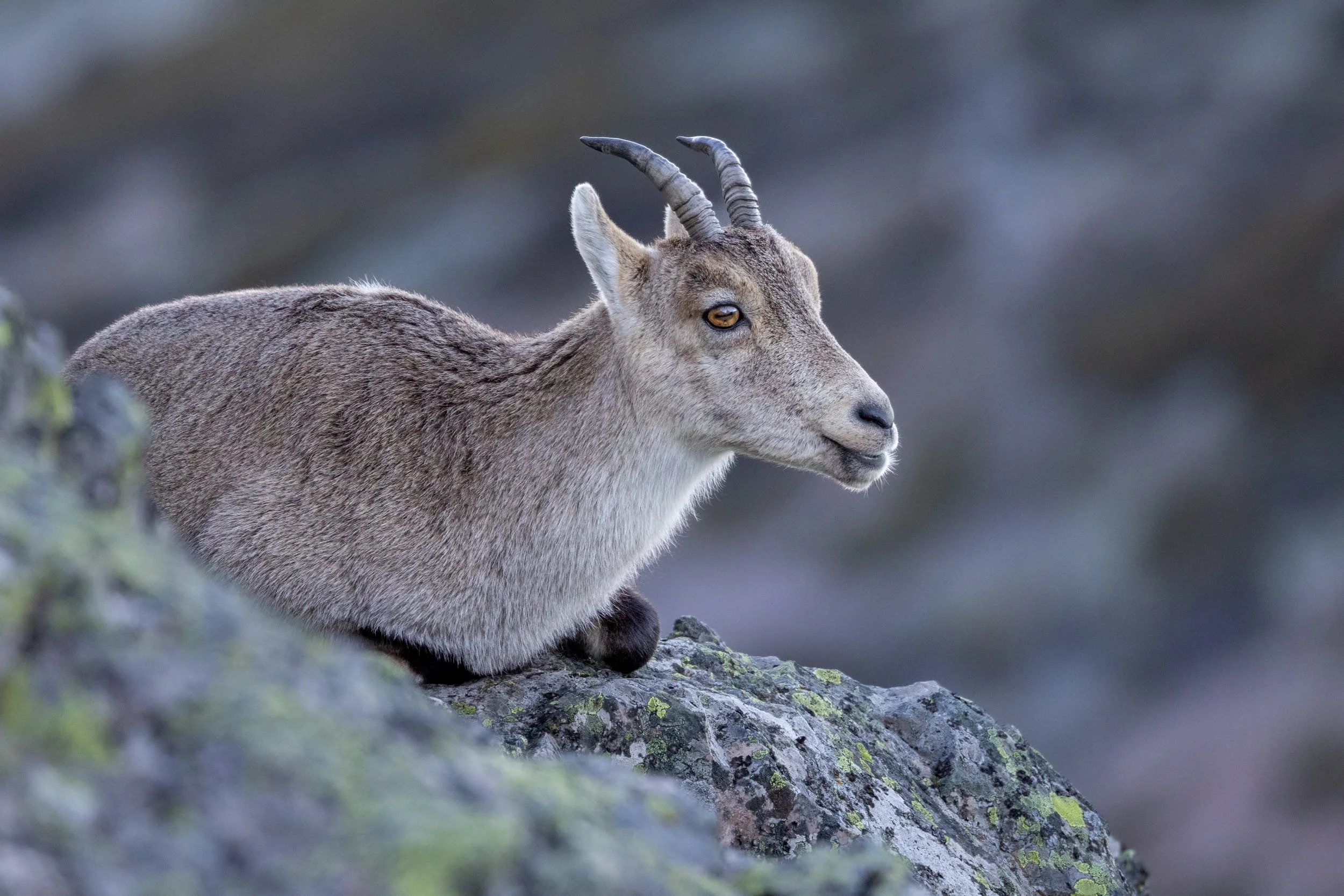
Iberian ibex | Canon R10 + Canon RF 200-800mm | ISO 1600, 1/250, f/9 @ 637mm
Who is this lens for?
The Canon RF 200-800mm f/6.3-9 IS USM is designed for photographers who want serious reach without spending the price of a small car. Understanding its strengths and trade-offs will help you decide if it’s the right fit for you.
You should consider this lens if:
You’re a wildlife photographer on a budget. This lens offers 800 mm of reach at an unprecedented price for its focal length. For anyone looking to move beyond entry-level zooms, it's a considerable upgrade.
You value flexibility across focal lengths. The 200-800 mm range covers almost everything — from environmental portraits to tight wildlife close-ups — without needing to swap lenses.
You prefer shooting handheld. Despite its size, it’s light enough to use for long sessions, and the image stabilization makes handheld shooting genuinely practical.
You shoot with a full-frame Canon body. Cameras like the R5, R6 II, and R8 bring out the best in this lens, especially in autofocus accuracy, color, and noise control.
You enjoy fieldcraft and patience. It rewards careful positioning and timing more than brute-force low-light power. If you like working deliberately and reading your subject’s behavior, this lens will serve you well.
You might want to skip this lens if:
You often shoot in very low light. The narrow aperture limits your options at dawn, dusk, or in dense forests unless you’re willing to push ISO or experiment with slower shutter speeds.
You rely on super-fast autofocus for action or sports. While the focus system is quick, it’s not built to match Canon’s top-tier L-series primes in absolute speed or accuracy.
You want something discreet. Although it's lighter than many competitors, it remains large and very noticeable in the field or while traveling.
Bottom line
The Canon RF 200-800mm f/6.3-9 IS USM changes what’s possible for wildlife photographers. It offers a level of reach, portability, and affordability that simply didn’t exist before.
For me, it’s one of the most practical super-telephoto lenses Canon has ever made. It delivers excellent image quality for its price and gives you unmatched flexibility in the field without having to change lenses.
It’s not as fast as larger, more expensive primes, and image quality still can’t match something like my 300mm f/2.8. But it’s also a fraction of the size, weight, and price, meaning you’ll be more likely to carry it around and shoot more.
The only real limitations are the aperture and the physical size. But for anyone willing to work with those compromises, the Canon RF 200-800mm might be the best all-around wildlife lens you can buy today.
Bonus: Canon RF 200-800mm community feedback and photos!
Matt Parish
Matt Parish is an amateur wildlife photographer and co-host of the Angry Bird Pod Show who is based in Ontario, Canada. He's on a mission to showcase intimate, detailed images of animals from his own unique perspective.
“With this lens, I can stay back and still capture the fine detail and character that make each songbird unique,” he says. “The f/6.3–9 range sounds modest on paper, but paired with modern sensors, it delivers clean, bright results even in shaded woodland. It’s hard to overstate how effective the stabilization is; it makes 800mm feel effortless, even when tracking quick, jittery movements. The lens focuses surprisingly close, even at full zoom. Perfect for those intimate songbird shots when they land closer than expected.”
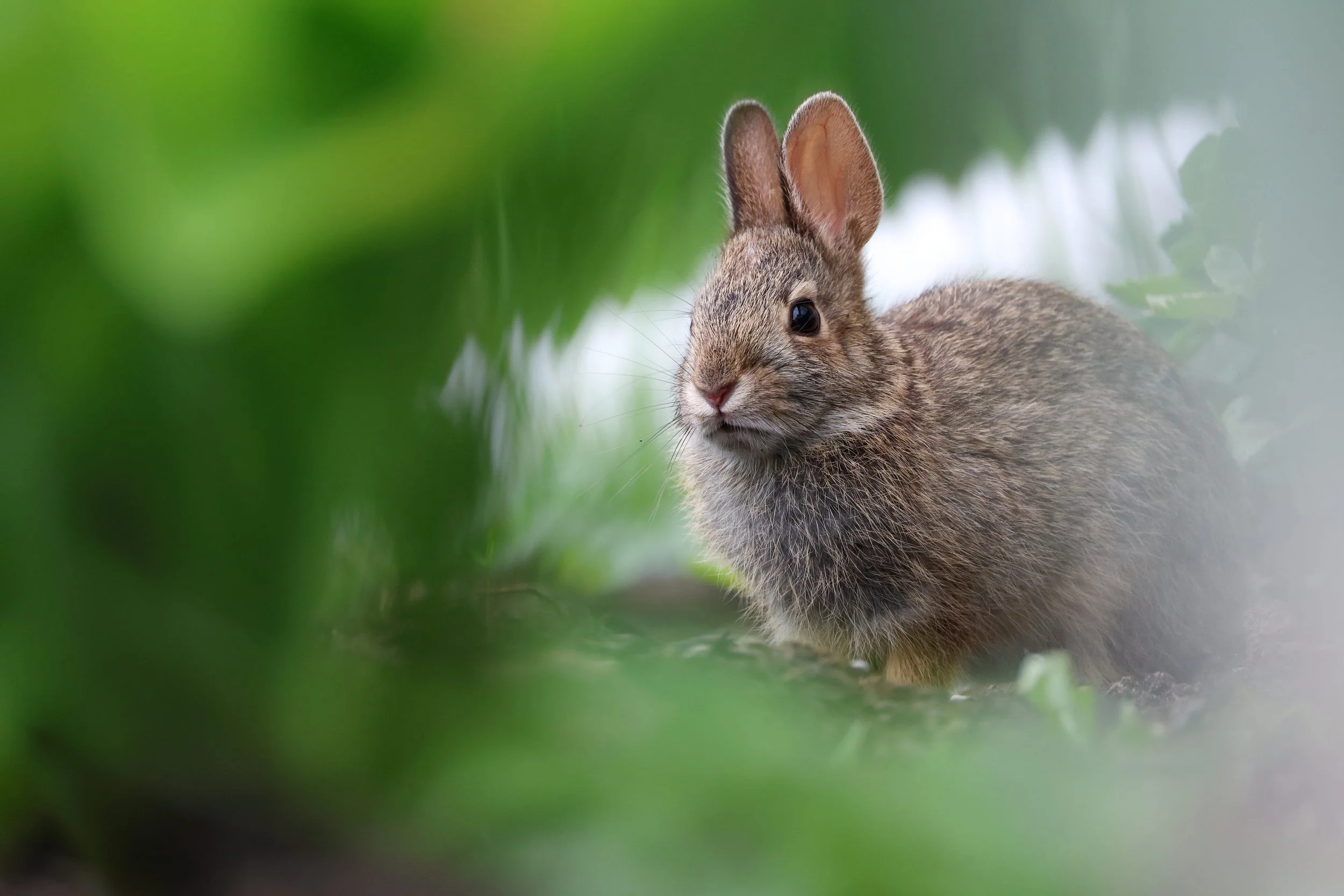
Eastern cottontail | Canon R8 + Canon RF 200-800mm | ISO 3200, 1/400, f/9 at 800mm
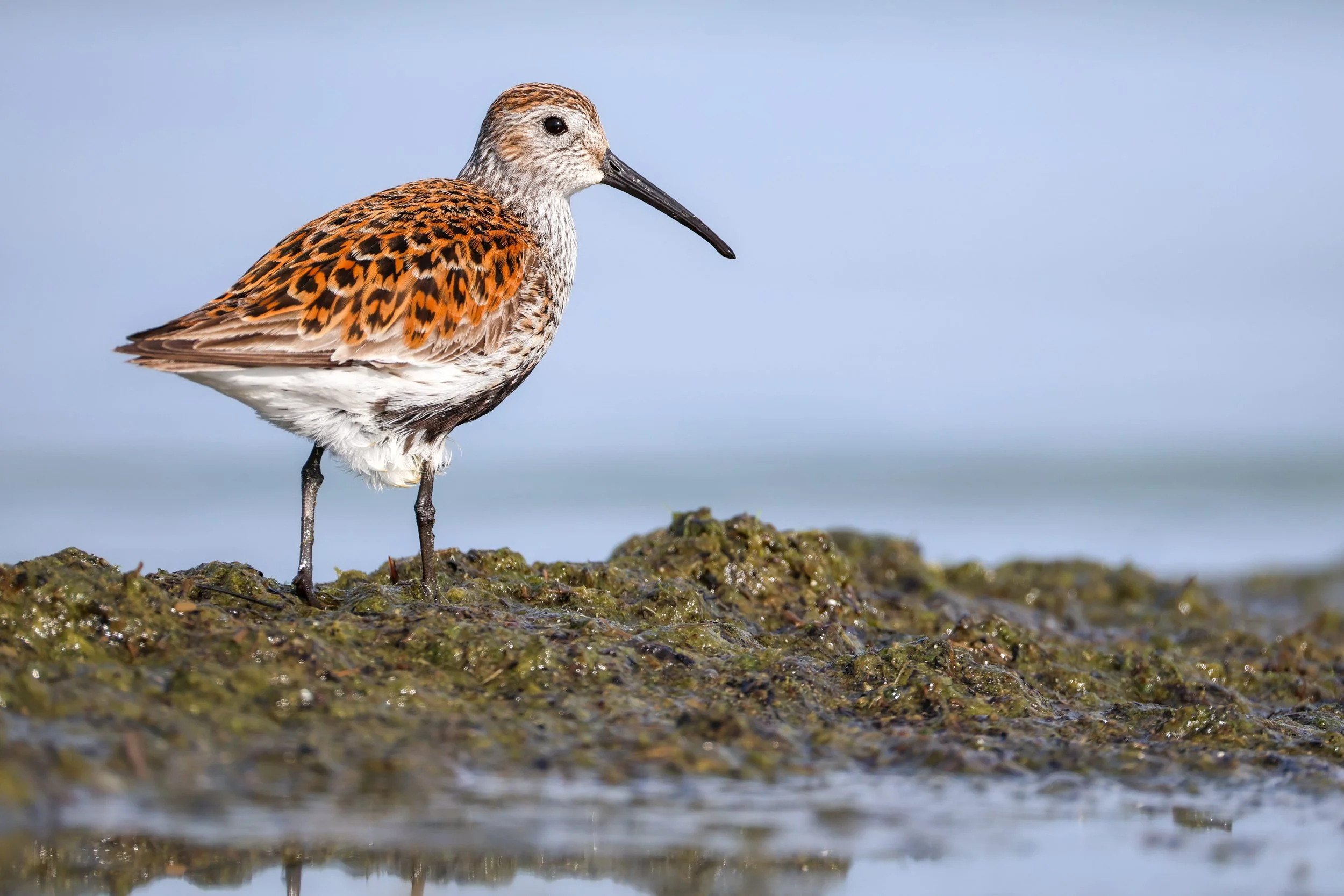
Dunlin | Canon R8 + Canon RF 200-800mm | ISO 640, 1/2000, f/9 at 707mm
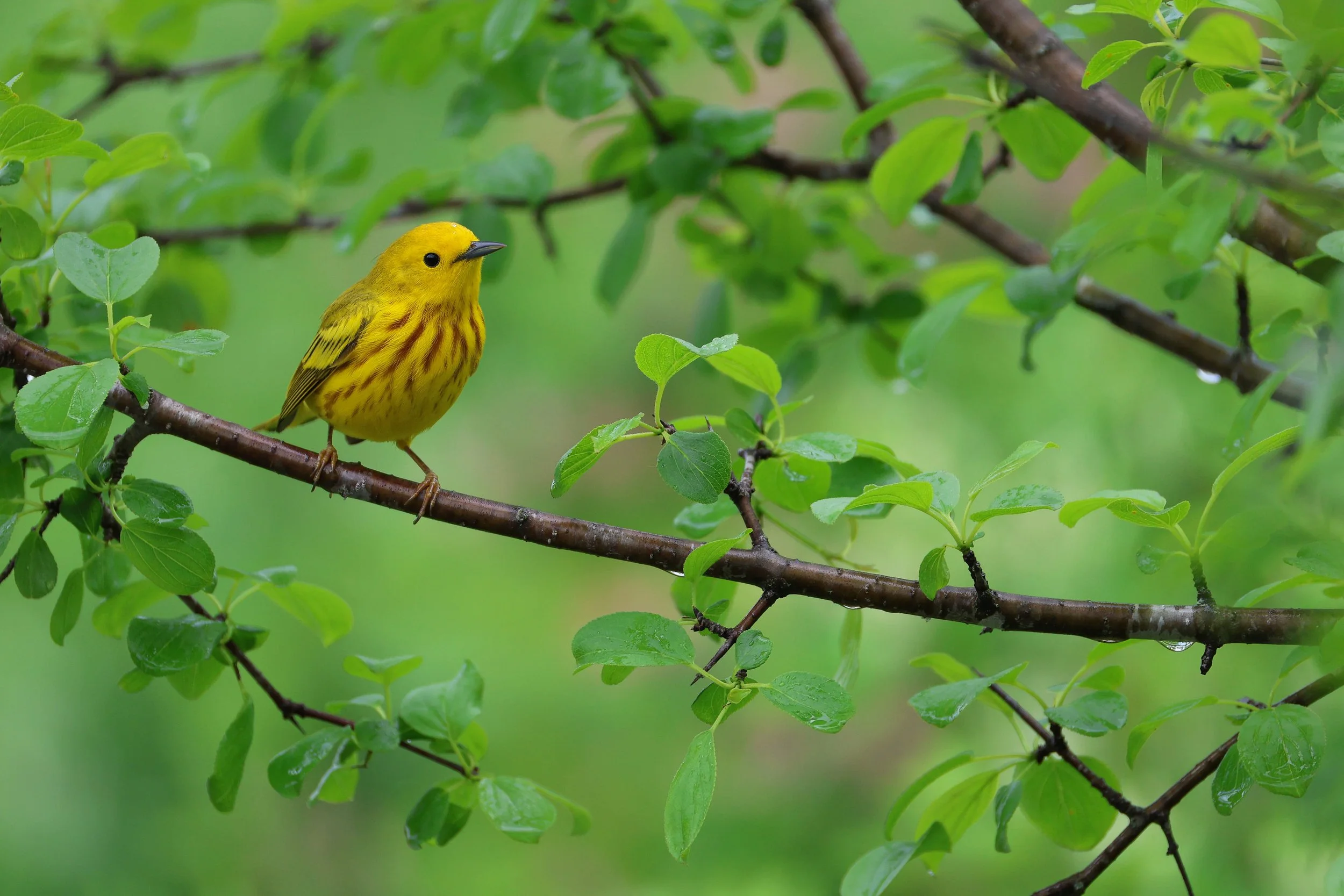
Yellow warbler | Canon R8 + Canon RF 200-800mm | ISO 1000, 1/500, f/9 at 800mm
Rain Saulnier
Rain Saulnier is a professional wildlife photographer from Kingston, Ontario, who moved to Calgary, Alberta, in 2018. Rain's passion for wildlife photography began in May 2020 and since then, his work has been recognized by photography organizations, such as Bird Photographer of the Year, National Geographic and Canadian Geographic. Rain also recently did a YouTube review of the Canon RF 200-800
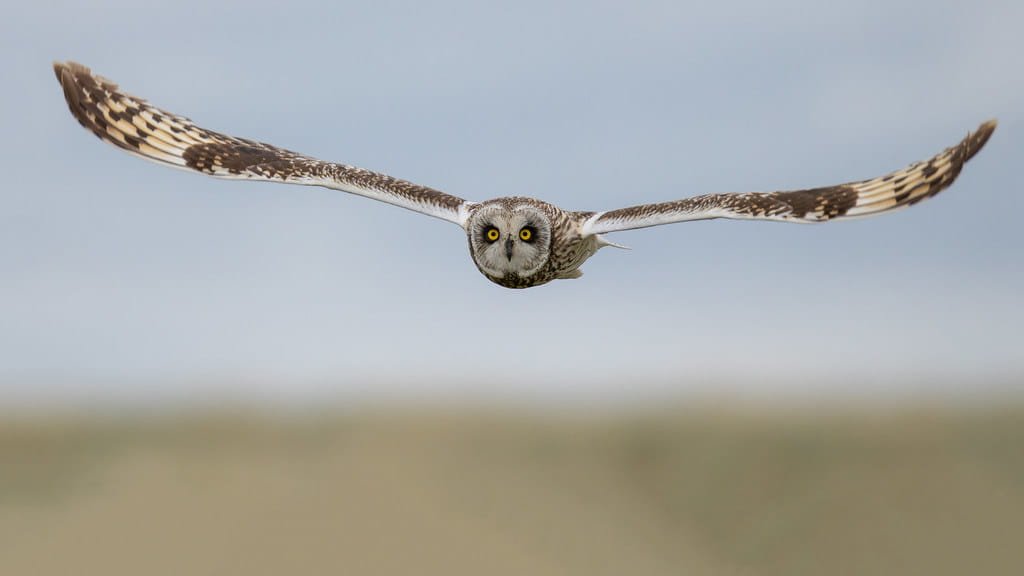
Short-eared owl | Canon R10 + Canon RF 200-800mm | ISO 1000, 1/1600, f/9 at 800mm
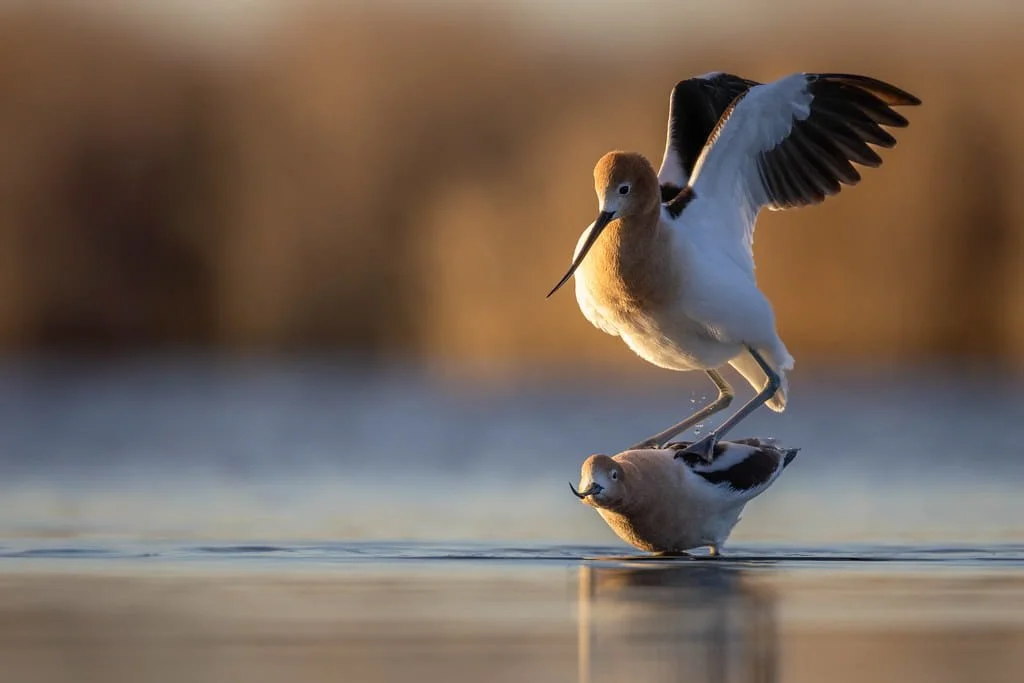
American avocets | Canon R10 + Canon RF 200-800mm | ISO 320, 1/500, f/9 at 800mm
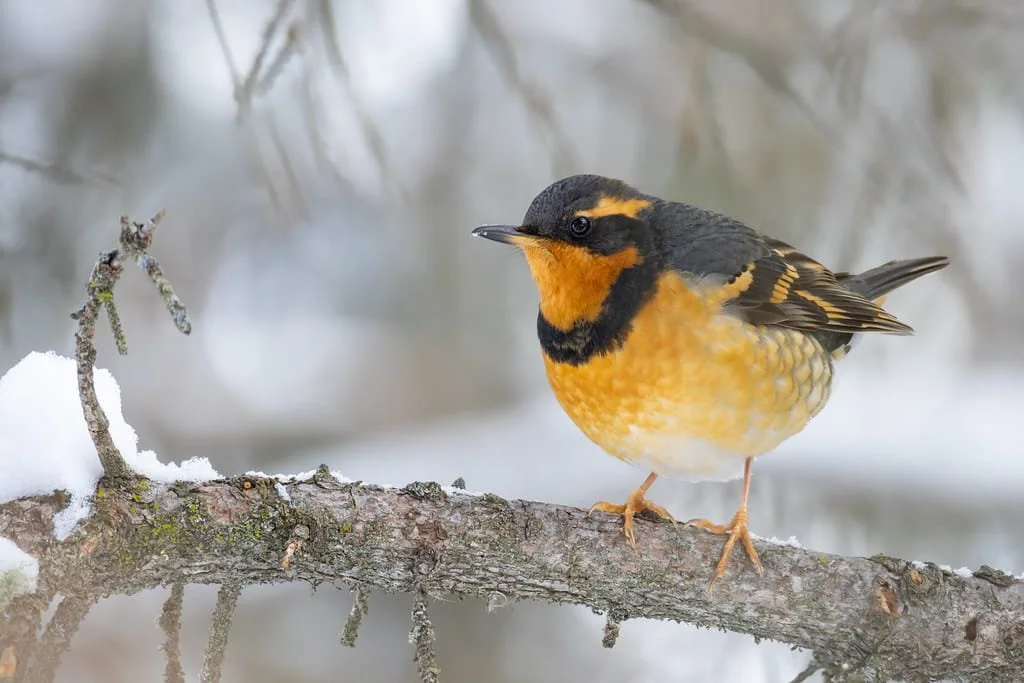
Varied thrush | Canon R10 + Canon RF 200-800mm | ISO 2000, 1/250, f/9 at 800mm
Who is this lens for?
The Canon RF 200-800mm f/6.3-9 IS USM is designed for photographers who want serious reach without spending the price of a small car. Understanding its strengths and trade-offs will help you decide if it’s the right fit for you.
You should consider this lens if:
You’re a wildlife photographer on a budget. This lens offers 800 mm of reach at an unprecedented price for its focal length. For anyone looking to move beyond entry-level zooms, it's a considerable upgrade.
You value flexibility across focal lengths. The 200-800 mm range covers almost everything — from environmental portraits to tight wildlife close-ups — without needing to swap lenses.
You prefer shooting handheld. Despite its size, it’s light enough to use for long sessions, and the image stabilization makes handheld shooting genuinely practical.
You shoot with a full-frame Canon body. Cameras like the R5, R6 II, and R8 bring out the best in this lens, especially in autofocus accuracy, color, and noise control.
You enjoy fieldcraft and patience. It rewards careful positioning and timing more than brute-force low-light power. If you like working deliberately and reading your subject’s behavior, this lens will serve you well.
You might want to skip this lens if:
You often shoot in very low light. The narrow aperture limits your options at dawn, dusk, or in dense forests unless you’re willing to push ISO or experiment with slower shutter speeds.
You rely on super-fast autofocus for action or sports. While the focus system is quick, it’s not built to match Canon’s top-tier L-series primes in absolute speed or accuracy.
You want something discreet. Although it's lighter than many competitors, it remains large and very noticeable in the field or while traveling.

Common tern | Canon R8 + Canon RF 800mm f/11 IS STM | ISO 1000, 1/200, f/11
Bottom line
The Canon RF 200-800mm f/6.3-9 IS USM changes what’s possible for wildlife photographers. It offers a level of reach, portability, and affordability that simply didn’t exist before.
For me, it’s one of the most practical super-telephoto lenses Canon has ever made. It delivers excellent image quality for its price and gives you unmatched flexibility in the field without having to change lenses.
It’s not as fast as larger, more expensive primes, and image quality still can’t match something like my 300mm f/2.8. But it’s also a fraction of the size, weight, and price, meaning you’ll be more likely to carry it around and shoot more.
The only real limitations are the aperture and the physical size. But for anyone willing to work with those compromises, the Canon RF 200-800mm might be the best all-around wildlife lens you can buy today.